

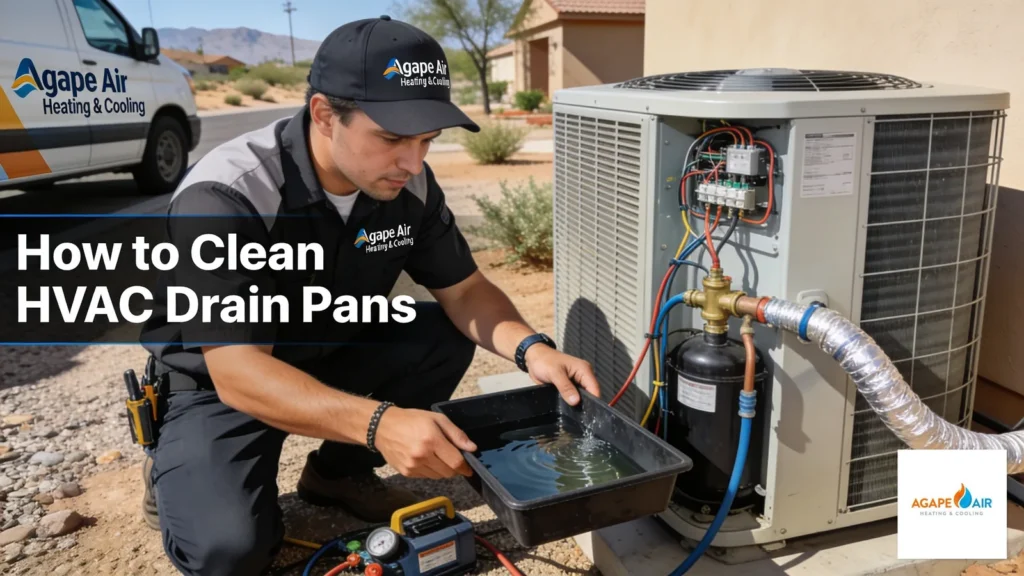
How to Clean HVAC Drain Pans
How to Clean HVAC Drain Pans
Cleaning an HVAC drain pan starts with switching off the system, then removing standing water with a wet/dry vacuum. At Agape Air Heating & Cooling, we scrub the pan with a mixture of water and distilled vinegar to break down algae and sludge, rinse thoroughly, and flush the drain line to prevent the clogs that cause musty odors and unexpected shutdowns.
Key Takeaways
- Turn off your air conditioning unit completely before attempting any drain pan cleaning work.
- Pour one cup of distilled vinegar into the access point to dissolve buildup and clogs.
- Use a wet/dry vacuum to suction out clogs from the outdoor drain line exit point.
- Reach out to us at Agape Air Heating & Cooling for professional drain cleaning if DIY methods fail.
Why Does Your HVAC Drain Pan Need Cleaning?
A dirty drain pan sets the stage for water damage, mold, and a struggling AC system. At Agape Air Heating & Cooling, we treat this pan as one of the most overlooked parts of a home comfort system, and it carries real consequences when neglected. Left unchecked, a clogged drain line or pan backs up condensation until it has nowhere to go but onto your floor or ceiling. That backup does more than create a puddle. Standing water breeds mold growth, and a blocked line forces the whole system to work harder, cutting cooling performance just when temperatures climb. We consider drain pan maintenance a frontline defense against these problems, not an optional extra.
How do I know if my drain pan is failing?
Look for water sitting in the pan longer than it should. The pan exists to hold condensation briefly, draining it away as the system runs. If water lingers or pools, something downstream has already gone wrong, and waiting only makes the fix harder. We recommend homeowners check this pan periodically, especially before peak cooling season. Catching a problem early keeps a small repair from turning into a flooded closet or a damaged ceiling, and if you’d like us to take a look, you can schedule a visit with our team.
Why does regular cleaning matter so much?
Routine attention helps prevent a clogged drain before it ever forms. Consistent upkeep stops minor buildup from becoming a major system failure, supports energy-efficient performance, and improves indoor air quality throughout your home. Here is what neglecting this task typically leads to:
- Water leaks near the indoor unit
- Musty odors from trapped moisture and mold
- Reduced cooling as airflow and drainage struggle together
- Higher repair costs once the problem spreads to nearby components
We serve homeowners throughout Gilbert, AZ, and we see these same warning signs season after season. A properly functioning drain pan keeps your entire cooling system reliable when you need it most.
What Signs Point to a Dirty Drain Pan?
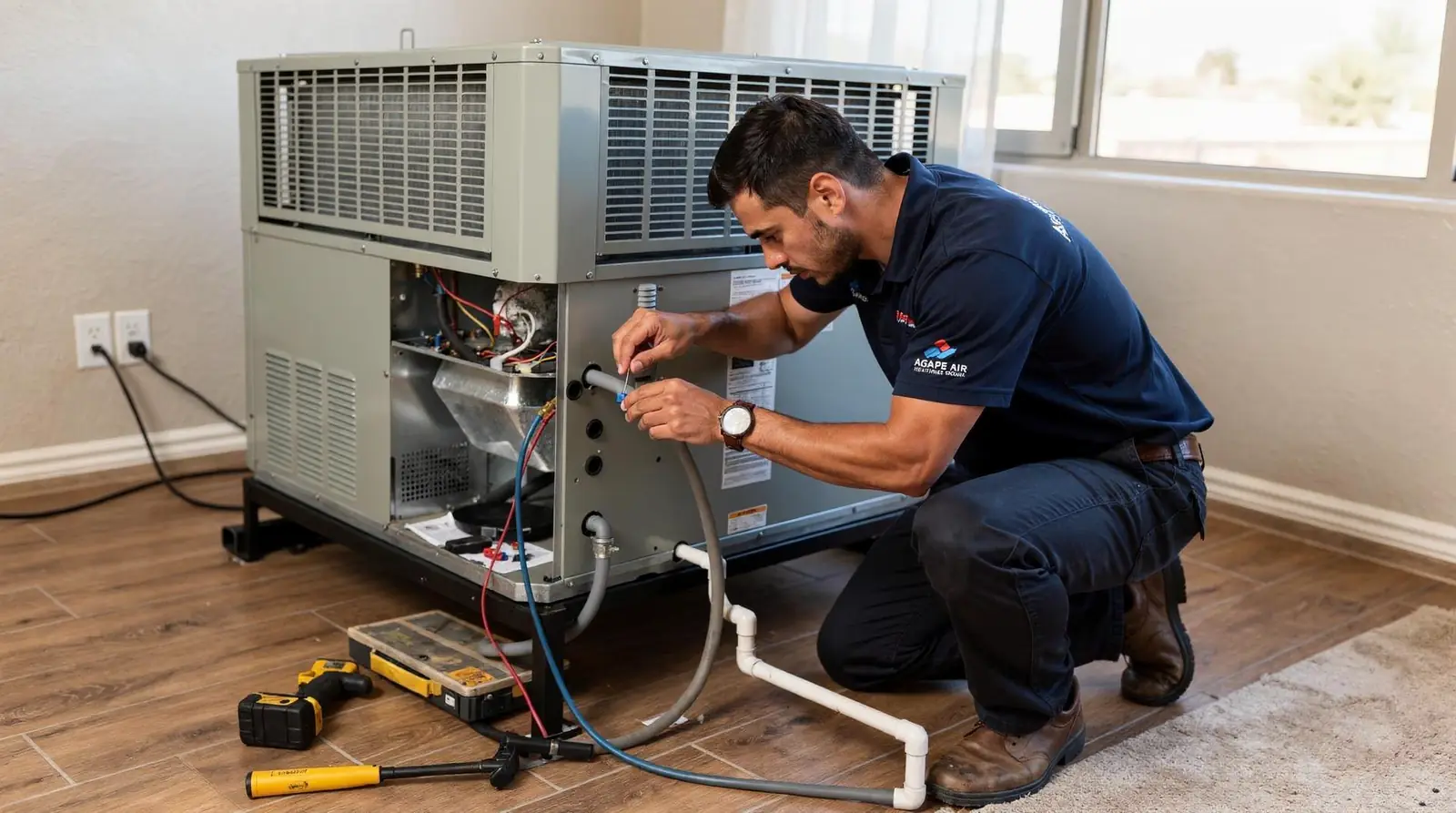
A musty odor drifting from the indoor unit ranks among the clearest warnings of a dirty pan or blocked line. Standing water near the equipment, a system that stops cooling, or an AC that shuts off without warning all point to the same underlying problem, and we treat these symptoms as urgent. A clogged drain line remains one of the most common causes of AC malfunction we see across Gilbert, AZ homes. Ignoring these warning signs costs homeowners more than comfort. Left unchecked, a backed-up pan invites water damage to floors and ceilings, encourages mold growth, and forces the compressor to work against moisture it was never designed to handle. Our team recommends a clean HVAC drain as the first response the moment any of these signs appear.
How do I know if my drain pan or line is clogged?
Watch for the combination of symptoms rather than just one isolated clue. Water pooling near the indoor unit, weakened airflow, and an unusual smell together suggest a blockage rather than a minor issue. We consider these three signs the clearest indicators homeowners can check without opening the equipment:
- Musty or mildew-like odor near the indoor unit
- Water leaking or pooling around the base of the system
- Sudden shutdown or weak cooling despite the thermostat running
Can a dirty drain pan cause my AC to shut off?
Yes. A clogged line often triggers a safety switch that stops the system before water overflows onto the floor. This shutdown protects the home but leaves occupants without cooling, sometimes during the hottest part of the day. Consistent drain pan maintenance reduces how often this switch trips and helps the unit run without interruption. When symptoms appear suddenly and worsen fast, our emergency repair service stands ready to respond before damage spreads further.
What Tools Do You Need Before Starting?
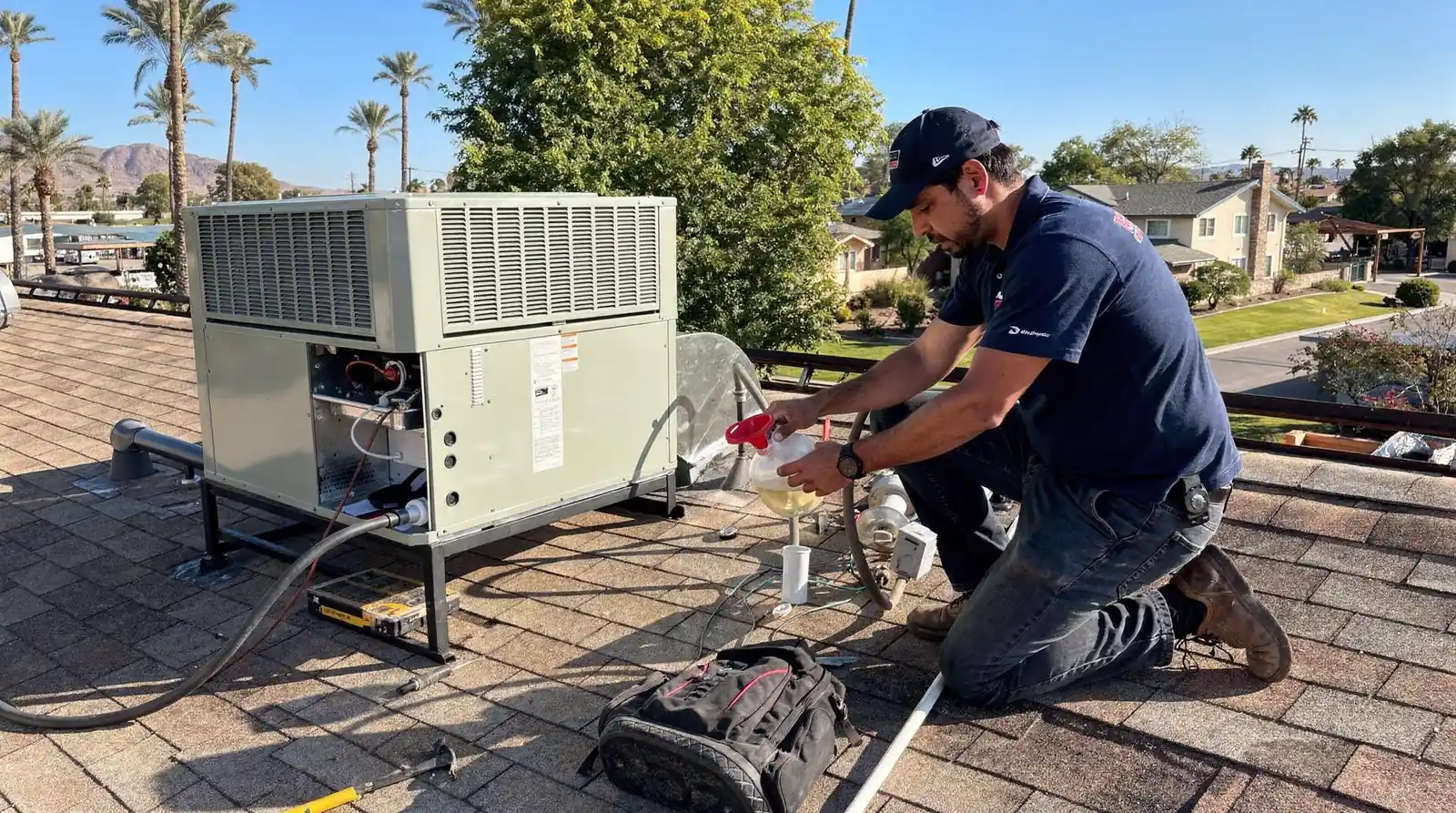
Two household items handle most drain line clogs: a wet/dry vacuum and distilled vinegar. We recommend gathering both before touching the unit, since switching tasks mid-project wastes time and risks leaving the system exposed to moisture damage. Before any hands-on work, we always power down the air conditioning unit at the thermostat and breaker. This safety step protects both the homeowner and the equipment, and it’s non-negotiable in our own service visits. Once the power is off, we’re ready to move through the process step by step.
- Shut off the AC unit completely at the thermostat and the breaker.
- Locate the drain line access point near the indoor unit and the exit point outdoors.
- Attach a wet/dry vacuum to the exit point and run it to pull the clog free.
- Pour a cup of distilled vinegar into the access point to dissolve remaining buildup.
- Check the drain pan for standing water once the line runs clear.
Do I need any special equipment to clean a drain line myself?
No specialized tools are required for basic upkeep. A standard wet/dry vacuum and distilled vinegar cover the majority of routine clogs, making this an accessible task for most homeowners.
What if these tools don’t clear the clog?
If suction and vinegar fail to restore flow, the blockage likely sits deeper in the line or involves buildup our team encounters regularly. At that point, we suggest reaching out for a professional evaluation. We provide estimates through our heating services for homeowners who would rather have a qualified eye assess the system before further drain pan maintenance or repair work begins. Catching the problem early helps prevent clogged drain issues from escalating into water damage or system shutdowns.
How Do You Locate the Drain Pan and Line?
Two access points matter most: the drain line entry near the indoor unit, and the exit point outside the home. Finding both is the first step before we can clean an HVAC drain or check for blockages, since missing either spot means guessing at the source of a leak instead of solving it. We start indoors, tracing the PVC pipe connected to the air handler or furnace coil. That pipe usually runs a short distance before heading outside, where it terminates near the foundation or exterior wall. Following the line from indoor origin to outdoor exit gives us a full picture of where debris tends to collect.
Where is the drain pan located?
The drain pan sits directly beneath the indoor evaporator coil, catching condensation as it forms. This pan exists to hold normal moisture temporarily, not to store standing water for days at a time. If we find water sitting in the pan longer than expected, that’s a clear signal something downstream needs attention.
Why does the location matter for maintenance?
Knowing both locations turns guesswork into a simple visual check. Drain pan maintenance becomes far easier once homeowners know exactly where to look for rust, cracks, or standing water. Regular visual inspection helps prevent a clogged drain before it forces the system to shut down. Our technicians at Agape Air Heating & Cooling work across every major HVAC brand. No matter what system sits in a Gilbert, AZ home, we can pinpoint the pan and line quickly. That familiarity lets us diagnose issues faster and get cooling systems back to normal operation with less disruption to the household.
How Do You Clean the Drain Pan Step by Step?
Five steps stand between a homeowner and a clean HVAC drain system: power down, remove, wash, flush, and vacuum. Skip any one of them, and standing water builds up again within weeks, inviting mold and shutting the whole system down at the worst possible moment. We walk our clients through this exact sequence during seasonal visits, and it works just as well for a homeowner tackling it solo on a Saturday morning. Before touching anything, confirm the unit sits off at the thermostat and breaker. Water and electricity do not mix, and a live system makes the pan harder to remove safely.
- Shut down the air conditioning unit. Cut power at the thermostat and the breaker panel to avoid electrical hazards while the housing is open.
- Remove the drain pan from the indoor unit. Most pans slide out or unclip from beneath the evaporator coil once the access panel comes off.
- Wash the pan thoroughly. Rinse away dirt, algae film, and debris buildup with warm water and a mild dish soap, scrubbing the corners where sludge collects.
- Pour distilled vinegar through the drain access point. A cup of vinegar dissolves the biofilm and mineral scale that lead to pan overflow before it hardens further.
- Vacuum the exit point with a wet/dry vacuum. Suctioning from the outdoor exit pulls out any clog sitting deeper in the connected line that vinegar alone will not reach.
This routine counts as genuine drain pan maintenance. Repeating it each season keeps the pan from filling back up between visits.
How Often Should the Drain Pan Be Cleaned?
We recommend cleaning the pan and line at the start of cooling season, then checking again mid-summer during Arizona’s heaviest-use months. Homes with pets, dust, or nearby trees tend to see faster buildup and benefit from a mid-season check.
What If the Clog Won’t Clear?
Persistent clogs after the vinegar and vacuum steps usually mean the blockage sits farther down the line or has hardened past what home tools reach. At that point, we recommend contacting our professional drain line cleaning service rather than forcing tools through the pipe. Our team handles these calls efficiently, completing repair and maintenance work in a timely, dependable manner so the system gets back to normal fast. Catching the problem early through consistent steps to prevent clogged drain lines saves homeowners from water damage, mold remediation, and an unexpected system shutdown during peak heat.
How Often Should You Repeat This Maintenance?
Twice a year covers most homes: once before cooling season and once before heating season, as we detail in our HVAC winter maintenance guide. A neglected drain line does not announce itself until water shows up on the floor or a musty smell fills the room, and by then the fix costs more time and worry. We treat this rhythm as the backbone of any effort to prevent clogged drain lines, and we build it directly into our seasonal service visits. Between those two checkpoints, a quick visual inspection every month helps catch trouble early. We recommend homeowners glance at the drain pan and access point for standing water, discoloration, or slow drainage. This simple habit, paired with drain pan maintenance, keeps small issues from becoming expensive repairs.
How does professional maintenance fit into this schedule?
Our team at Agape Air Heating & Cooling has supported Gilbert, AZ homeowners for years, and we build drain line checks into every routine service call. Booking a seasonal appointment with us means a technician inspects the pan, flushes the line, and confirms the system runs efficiently before the temperature swings hit hard.
What happens if I skip a cleaning cycle?
Skipping even one cycle lets sediment and algae rebuild inside the line. Minor buildup escalates into blockages that strain the whole system and shorten its working life. Regular attention protects indoor air quality too, since standing water invites mold growth homeowners would rather avoid. A dependable schedule looks like this:
- Inspect the drain pan and line monthly for standing water or odor.
- Perform a full clean HVAC drain flush at the start of cooling season.
- Repeat the flush before heating season begins.
- Reach out to our team if clogs return between scheduled visits.
What Mistakes Should You Avoid When Cleaning?
Three mistakes cause most of the trouble we see: skipping the power shutoff, ignoring early warning signs, and grabbing an unfamiliar chemical off a store shelf. Each one turns a five-minute task into an expensive repair call. We walk our customers through the process specifically to help them avoid these missteps. Preventing a clogged drain starts with respecting the unit itself. Cutting power before touching any component isn’t optional in our book — it’s the first real step, and skipping it invites shock hazards or accidental system damage while hands are near electrical parts. Waiting too long is the next common error. A musty smell, a puddle near the indoor unit, or an AC that shuts off on its own are early distress signals, not minor annoyances. Left alone, a small blockage grows into a full system malfunction, often forcing a repair that could have been a simple cleaning.
Is it safe to use store-bought drain line cleaners?
We advise caution here. Grabbing an unfamiliar solution without knowing how it interacts with your system’s materials risks corroding lines or damaging components you can’t easily see. When we handle drain pan maintenance and line clearing, we choose methods matched to the actual equipment in front of us, not a generic bottle from a shelf.
Why trust a professional over a DIY shortcut?
Because our recommendations come from what your system actually needs. We don’t push extra services or upsells — we diagnose the real issue and fix it. Avoid these missteps and you’ll protect both your system and your budget:
- Never skip the power-off step before inspecting or clearing a line.
- Never delay action once you notice leaks, odors, or shutdowns.
- Never introduce unknown chemicals into your clean HVAC drain system without guidance.
Reach out to us at Agape Air Heating & Cooling when the warning signs appear, and we’ll handle it correctly the first time.
When Should You Call a Professional Instead?
Persistent clogs mark the clear line between a do-it-yourself fix and a service call. When vacuuming and vinegar treatments fail to restore flow, the blockage sits beyond what homeowners can safely reach. At that point, we recommend stopping the guesswork and calling in our qualified team.
Is a stubborn drain line clog hard to fix?
Not for an experienced HVAC contractor. What feels like a stuck, unsolvable problem at home is often a routine repair for our technicians, who have the tools to clear deeper blockages without damaging the line. A task that seems difficult from a homeowner’s chair rarely takes long once the right equipment gets involved. We built our reputation in Gilbert, AZ on that kind of reliability. Agape Air Heating & Cooling is a family-owned company, and years of local service mean we’ve seen nearly every version of a clogged line, from minor slow drips to full backups threatening drywall and flooring.
What should I do if my drain pan keeps overflowing?
Recurring overflow despite regular drain pan maintenance signals a problem deeper in the line or pan itself, not something a towel and a prayer will solve. Continued overflow risks water damage, mold growth, and a system that shuts down at the worst possible moment. Consider reaching out to us if any of the following apply:
- Water keeps pooling near the indoor unit despite recent cleaning
- Musty odors return within days of clearing the line
- The AC shuts off unexpectedly during peak summer heat
- Vinegar and vacuuming show no improvement after repeated attempts
Our goal is always to prevent clogged drain lines from becoming bigger headaches. We offer estimates, so reaching out costs you nothing but a conversation, and we’ll get a member of our team working on the problem quickly.
Get in Touch With Agape Air Heating & Cooling
If your drain pan or line needs a closer look, or DIY steps haven’t solved the problem, our team at Agape Air Heating & Cooling is ready to help. Reach out to us or schedule a service visit, and we’ll take care of the rest quickly and correctly.
FAQ
How do I clean my HVAC drain pan?
Turn off the system, remove standing water with a wet/dry vacuum, scrub the pan with a water and distilled vinegar mixture, rinse thoroughly, then flush the drain line to clear buildup.
What are the signs of a dirty or clogged drain pan?
A musty odor from the indoor unit, standing water near the equipment, reduced cooling, and an AC that shuts off without warning all signal a dirty pan or blocked drain line.
What happens if I don’t clean my HVAC drain pan?
Neglect leads to water leaks, mold growth, reduced cooling performance, and higher repair costs. Reach out to us at Agape Air Heating & Cooling if DIY methods fail to resolve the issue.