

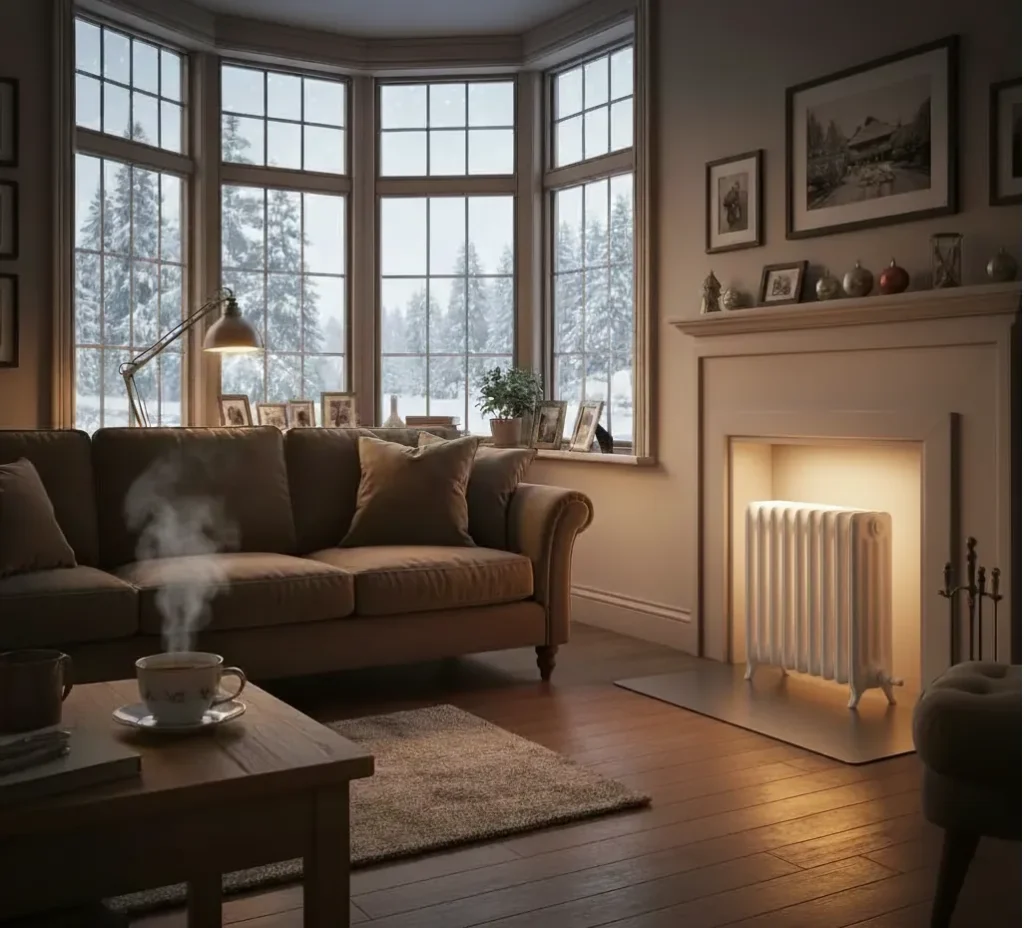
Winter HVAC Maintenance Checklist — Readying Your Heating System for Gilbert, AZ Winters
Winter HVAC maintenance involves preventive steps for homeowners and facility managers to ensure furnaces and heat pumps run safely, efficiently, and reliably through cooler months. In Gilbert, AZ, this work is tuned to mild but changeable winters, aiming to prevent breakdowns, maintain comfort, and trim energy use by focusing on filters, airflow, controls, and safety systems. This guide offers a DIY checklist, a breakdown of professional tune-ups, energy-saving tactics for Arizona homes, indoor-air guidance, and emergency troubleshooting tips. It covers homeowner actions, technician expectations, smart-thermostat settings, and steps if heat fails. Later sections include tables matching tune-up tasks to benefits, estimating savings, and recommending IAQ solutions. Follow this checklist to protect equipment, reduce costs, and keep homes and businesses comfortable.
Why Is Winter HVAC Maintenance Important for Gilbert, AZ Homes and Businesses?
Winter HVAC maintenance improves system reliability, lowers operating costs, and reduces safety risks. Regular service restores efficient heat transfer, maintains airflow, and calibrates controls for smarter operation. In Gilbert, seasonal dust and mild temperature swings mean equipment runs in bursts, so a pre-winter check prevents early cold snap failures. Maintenance also extends equipment life and supports warranty requirements.
- Key reasons to schedule pre-winter checks in Gilbert: Keep heating efficient with clean filters and properly calibrated thermostats.
- Catch safety issues early by inspecting combustion and electrical components.
- Reduce unexpected downtime with early fault detection.
- Maintain steady indoor comfort in homes and businesses when temperatures vary.
Routine maintenance prevents costly repairs and offers peace of mind. For professional help, offers tailored maintenance, inspections, and tune-ups for Gilbert-area residential and commercial systems, preventing breakdowns and boosting seasonal efficiency.
How Does Regular Winter Maintenance Improve Energy Efficiency and Reduce Costs?
Regular winter maintenance improves efficiency by restoring heat transfer and airflow, cutting run-time and fuel use. Clean filters reduce blower resistance; calibrated thermostats prevent overshooting; and sealed ducts limit losses—each step reduces system workload and saves money. Fixing airflow and calibration issues, especially with smart thermostats, noticeably lowers seasonal heating use. These measures also reduce compressor and burner cycling, lowering wear and preventing inefficiencies that drive up utility bills.
Routine tasks like filter replacement, blower checks, thermostat calibration, and duct sealing directly reduce wasted energy and repair risk. An annual tune-up often pays for itself through smaller bills and fewer emergency calls.
What Safety Benefits Does Preventative HVAC Maintenance Provide in Winter?
Preventative maintenance reduces safety risks by correcting conditions leading to combustion problems, electrical faults, or poor indoor air quality. Technicians inspect heat exchangers for cracks (CO risk), test safety controls, and verify venting. Electrical checks include tightening connections and looking for arcing or overheating. Working carbon monoxide detectors and fresh batteries are vital for homeowners alongside professional inspections.
Early safety fixes protect occupants and reduce costly emergency interventions. With safety covered, homeowners can focus on simple upkeep for efficient, safe operation.
What Are the Key DIY Winter HVAC Maintenance Tasks Homeowners Should Perform?
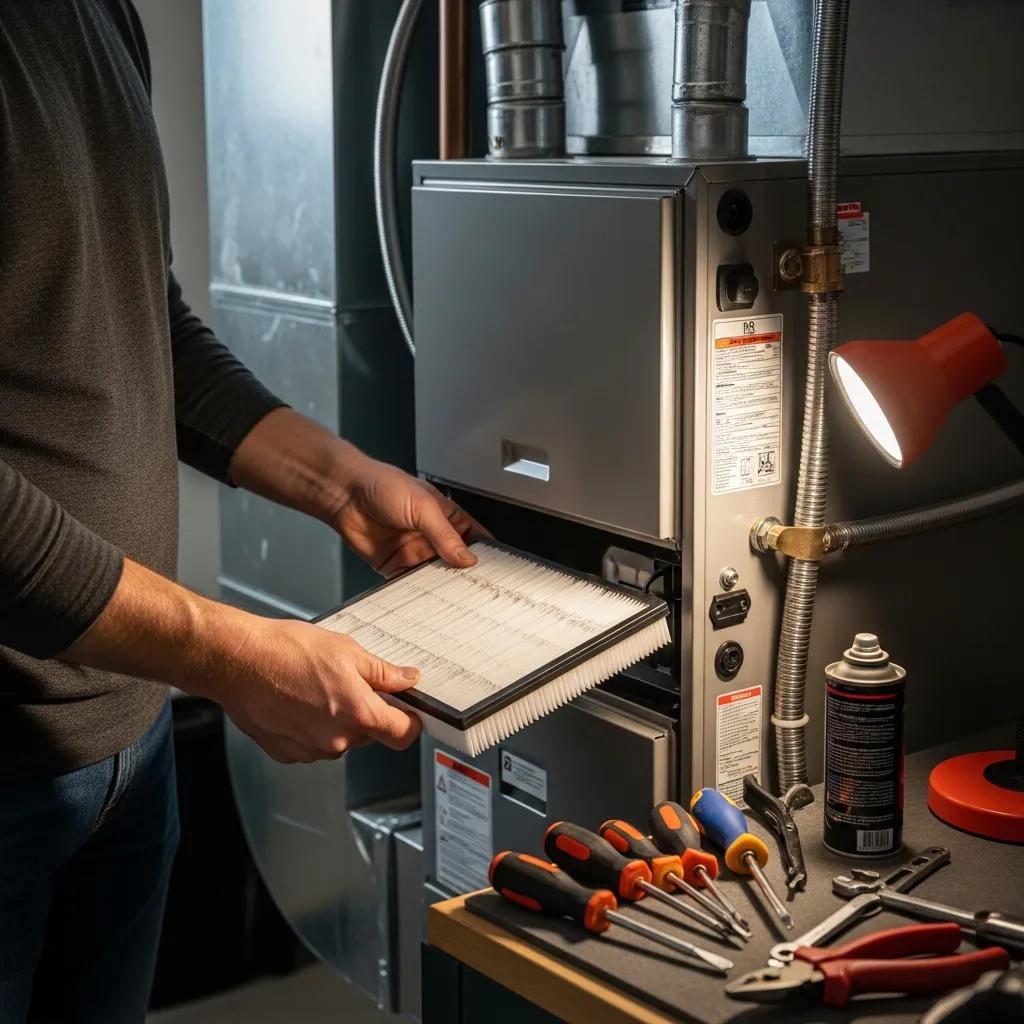
Homeowners can perform several safe, high-impact tasks to prepare heating systems for winter without special tools. Simple steps—replacing filters, checking thermostat schedules, testing carbon monoxide detectors, and clearing vents—reduce equipment strain and improve comfort. These actions protect indoor air quality, prevent airflow restrictions, and help spot issues early. Monthly checks during winter keep systems running smoothly.
- Replace or clean air filters to preserve airflow and indoor air quality.
- Program thermostats for efficient schedules and verify calibration.
- Test carbon monoxide detectors and replace batteries as needed.
- Clear vents and registers; make sure furniture or drapes aren’t blocking airflow.
Homeowner upkeep, paired with professional inspections, keeps equipment cleaner and alerts you to issues. Next, a how-to on filter replacement.
How Do You Replace or Clean Air Filters for Better Indoor Air Quality?
Start by finding the filter—usually in the furnace, air handler, or return grille—and note the printed dimensions for replacement. Disposable filters should be swapped monthly to quarterly in dusty Gilbert homes, depending on occupancy, pets, and dust. Washable filters require careful cleaning, drying, and inspection. Higher-MERV filters trap more particles but may affect blower performance; check compatibility. Always install filters with correct airflow direction and secure the frame.
Balancing indoor air quality with system airflow is key: moderate MERV ratings suit most homes, while allergy-prone households may benefit from higher-rated media with professional advice. Regular filter care reduces particle buildup on heat-exchange surfaces and in ducts, improving air quality and system efficiency.
How Should You Check and Adjust Thermostat Settings for Winter Efficiency?
Set a baseline temperature schedule balancing comfort and savings, typically lowering the setpoint during sleep or when away. Programmable and smart thermostats simplify setbacks and geofencing; a 6–8°F setback while away can cut heating runtime. Check thermostat accuracy against a room thermometer; recalibrate or replace if readings differ by more than a degree or two. Use adaptive recovery or learning modes carefully and test remote access.
Good thermostat management reduces unnecessary runtime and works best with sealed ducts and proper insulation; inspect distribution pathways after adjusting controls.
Why Is Testing Your Carbon Monoxide Detector Critical During Winter?
CO risk rises in winter as combustion appliances run more and homes are tighter; testing detectors ensures early warning. Test detectors monthly, change batteries annually, and replace units per manufacturer lifespan. Place detectors near sleeping areas and on every floor, avoiding placement next to fuel-burning appliances. If a detector sounds, evacuate immediately, call emergency services, and don’t re-enter until safe.
Regular detector checks complement professional heat-exchanger inspections, providing immediate occupant protection—another reason to keep vents and registers clear.
How Can You Clear Vents and Registers to Ensure Proper Airflow?
Clearing vents and registers preserves airflow and avoids uneven heating: move furniture/rugs, vacuum grilles, and check duct openings for debris. Run the HVAC fan on low to confirm unobstructed flow; note rooms with weak airflow, signaling duct leaks or blocked plenums. For heavy dirt or persistent imbalance, schedule professional duct inspection and cleaning. Balancing room registers often improves comfort without altering system settings.
Keeping vents unobstructed reduces blower strain and helps the system deliver even temperatures, boosting efficiency and comfort.
What Professional HVAC Tune-Up Services Are Essential for Winter Preparation?
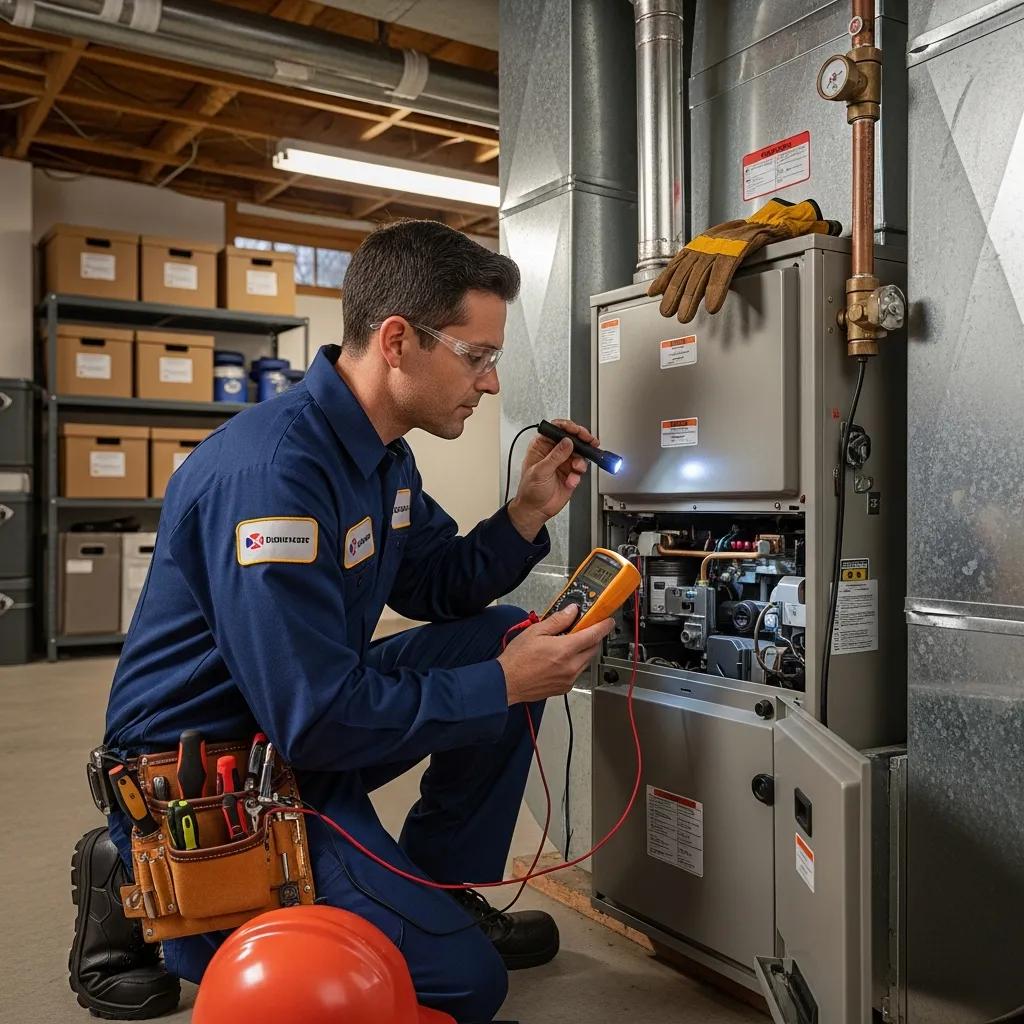
A professional winter tune-up includes safety checks, performance tests, and targeted maintenance homeowners shouldn’t attempt alone. Technicians inspect furnaces and heat pumps, test safety systems, verify refrigerant/defrost behavior, inspect heat exchangers, tighten electrical connections, and measure airflow/combustion efficiency. These services catch efficiency-reducing or safety-risking problems, often cleaning components to restore performance. Professional maintenance also documents system condition and helps keep warranties valid.
The table below summarizes common tune-up items, technician actions, and primary benefits, highlighting the value of a winter service visit.
| Tune-Up Element | Typical Technician Actions | Benefit Delivered |
|---|---|---|
| System inspection | Visual checks, operational tests, filter verification | Identifies worn parts and immediate issues |
| Heat exchanger inspection | Non-invasive checks for cracks and venting verification | Reduces CO risk and ensures safe combustion |
| Electrical & controls | Tightening connections, testing relays and safety switches | Prevents failures and improves reliability |
| Refrigerant & outdoor unit | Refrigerant level check, coil cleaning, clearance | Restores heat-pump efficiency and defrost function |
What Does a Furnace and Heat Pump Inspection Include?
A furnace and heat pump inspection reviews mechanical and control components for safe, efficient operation. Technicians check burners/elements, test ignition systems and safety interlocks, inspect airflow/filter condition, and verify thermostat communications. For heat pumps, they check reversing valves and defrost cycles; for furnaces, combustion analysis and venting checks may be included. Each inspection prevents specific failures like ignition faults or blocked airflow.
A thorough inspection lowers seasonal interruption risk and supports energy savings, making it a smart investment before sustained winter use.
How Do Technicians Examine and Maintain the Heat Exchanger and Electrical Connections?
Technicians inspect heat exchangers visually and with non-invasive tools for cracks, corrosion, or spillage that could allow combustion gases into living spaces. They also confirm proper venting and flue integrity. Electrical work includes tightening terminal connections, testing capacitors/contactors, and verifying control boards and safety switches. Fixing loose connections and marginal parts prevents intermittent failures and reduces fire and CO risks.
Heat-exchanger and electrical checks require training and tools, so qualified technicians should always handle these tasks for accurate diagnosis and safe repair.
Why Is Professional Refrigerant Level Check and Outdoor Unit Clearance Important for Heat Pumps?
For heat pumps, correct refrigerant charge and clear outdoor unit airflow are vital for efficient heat exchange and proper defrost cycles. Technicians measure pressures/temperatures to detect undercharge/overcharge, which can cause reduced capacity, longer run times, or short cycling. Outdoor units need clearance from debris, vegetation, and dust buildup (common Arizona issues) that restrict airflow and extend defrost cycles. Addressing these problems restores efficiency and prevents undue stress on compressors and reversing valves.
Keeping refrigerant balanced and outdoor units clear improves winter heating performance and reduces early-season service calls. Next, homeowner energy-saving steps.
How Can Gilbert, AZ Residents Save Energy During Winter with HVAC Maintenance?
Energy savings in Gilbert winters come from pairing HVAC tune-ups with home improvements and control strategies that reduce heat loss and unnecessary runtime. Smart thermostat programming, weatherstripping, insulation checks, and duct sealing are high-impact measures. Small, low-cost fixes like tightening door seals or adding attic insulation, combined with optimized HVAC controls, produce measurable savings. These steps lower utility bills, reduce system wear, and extend equipment life.
The table below links common energy-saving measures to implementation steps and estimated benefits for prioritization.
| Measure | Implementation Steps | Estimated Benefit |
|---|---|---|
| Smart thermostat | Program setback schedules; enable adaptive features | 5–15% seasonal savings |
| Weatherstripping | Seal doors/windows, inspect thresholds | Reduced drafts and improved comfort |
| Duct sealing | Seal visible seams, insulate ducts in unconditioned spaces | 5–15% improved distribution efficiency |
| Insulation tweaks | Add attic/door insulation where deficient | Lower peak heating demand |
What Role Do Smart Thermostats Play in Winter Heating Efficiency?
Smart thermostats cut runtime and improve comfort by learning habits, enabling setbacks, and offering remote control/energy reports. Features like geofencing and adaptive recovery reduce unnecessary heating while ensuring efficient temperature reach. Paired with professional calibration, smart thermostats minimize short-cycling and reveal inefficiencies for better savings.
Used correctly, a smart thermostat is a simple, data-driven way to keep comfort high and costs low.
How Does Weatherstripping and Insulation Improve HVAC Performance in Arizona Winters?
Sealing gaps around doors, windows, and attic penetrations cuts outside air infiltration and lowers heating demand, even in mild climates like Gilbert’s. Insulating key areas (attics, rim joists) helps hold heat and reduces cycling. A quick inspection includes feeling for drafts, checking weatherstrip, and inspecting attic insulation. Small sealing projects are low-cost and often deliver immediate comfort improvements and measurable savings.
Fixing envelope leaks reduces HVAC load and complements duct sealing/thermostat optimization for steady winter efficiency gains.
How Does Indoor Air Quality Change in Winter and What HVAC Solutions Help?
Indoor air quality (IAQ) can decline in winter as homes seal up and heating systems recirculate air, concentrating pollutants and lowering humidity. Dry air increases irritation and static; dust and particulates build up. HVAC solutions—humidifiers, air purifiers, higher-rated filters, and duct cleaning—tackle IAQ problems by adding moisture, removing particulates, or restoring clean airflow. The right choice depends on symptoms, building layout, and occupant sensitivities.
The table below compares common IAQ systems by recommended use and delivered improvement to help homeowners choose.
| Product/System | Recommended Use | IAQ Improvement |
|---|---|---|
| Humidifier | Low indoor humidity and static | Reduces dryness, improves comfort |
| In-duct air purifier | Allergies or particulates | Removes fine particles and allergens |
| Higher-MERV filters | General particulate reduction | Fewer airborne particulates |
| Duct cleaning | Visible dust, odors, or poor airflow | Improves airflow and reduces settled dust |
Why Are Humidifiers and Air Purifiers Important for Winter Indoor Air Quality?
Humidifiers restore comfortable moisture levels (30–50% RH) to reduce dry-skin irritation, static, and respiratory discomfort. Air purifiers and upgraded in-duct filtration lower allergens, dust, and particulates that build up when windows are closed. Standalone purifiers suit single rooms; whole-home in-duct systems provide continuous filtration. For integrated installs, consult a professional for compatibility and performance.
Combining humidification with improved filtration often provides the best results, addressing comfort and particulate load—another reason duct inspection and cleaning is worthwhile.
What Should You Do If Your Heating System Fails During Winter in Gilbert, AZ?
If your heating system fails, quick, safe troubleshooting can solve simple problems and provide technicians helpful information. Start with checks: confirm thermostat settings/batteries, replace dirty filters, check breakers/power, and clear outdoor units. If the system won’t run, note symptoms (noises, smells, cycling, error codes) for the technician. If a CO alarm sounds or combustion issues are visible, evacuate immediately and call emergency services.
How Can You Troubleshoot Common Furnace and Heat Pump Issues Before Calling for Help?
Start troubleshooting by confirming basic controls: thermostat set to heat above room level, and replace batteries. Check the home breaker box for tripped breakers, resetting only if safe. Inspect/replace clogged air filters, and clear debris from outdoor heat-pump units. Record problem start, sounds/smells, and recent maintenance for the technician.
When and How Should You Contact Agape Air Heating & Cooling for Emergency Repairs?
If basic troubleshooting fails—or if you notice serious warning signs like no heat, persistent unusual noises, visible smoke, or a CO alarm—contact a licensed service provider for emergency repair. Before calling, gather system details: equipment type, age, model number, and symptom description (e.g., “no heat,” “short cycling,” “loud compressor noise”). Sharing this helps technicians bring the right parts and safety gear.
Agape Air Heating & Cooling provides emergency and scheduled repair services for Gilbert-area homes and businesses. When safety or comfort is at stake, contacting a local, licensed professional ensures a fast, knowledgeable response and correct repair.
Prepare Furnace and Heat Pump for Winter
Getting your HVAC system ready for winter in Gilbert, AZ protects comfort, improves efficiency, and keeps occupants safe. Follow the essential checklist—regular filter care, thermostat setup, detector testing, vent checks, and a professional tune-up—to prevent costly repairs and maintain good indoor air quality. For personalized service, reach out to Agape Air Heating & Cooling for tailored inspections and tune-ups. Schedule maintenance now for a more reliable, worry-free winter.