

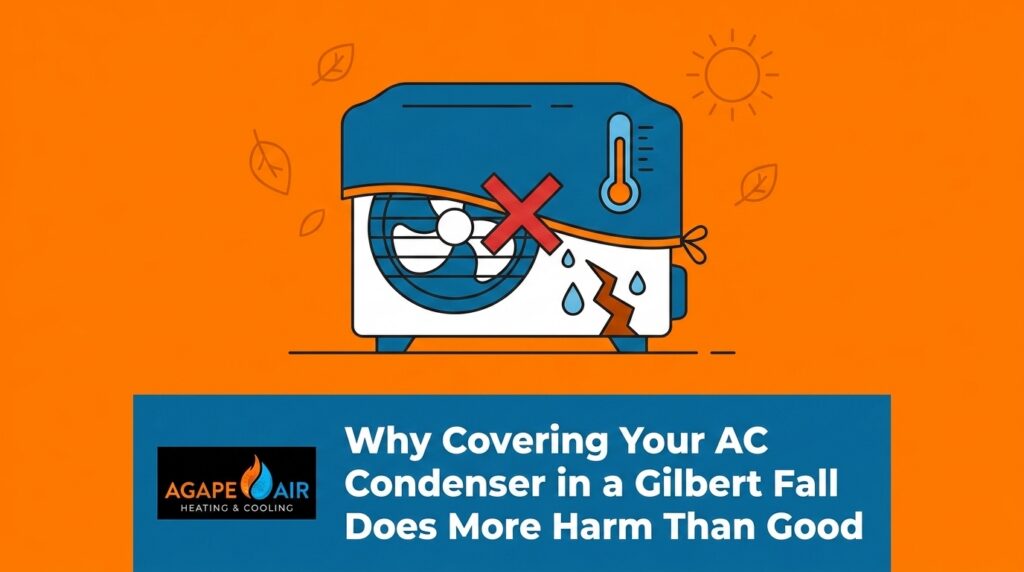
Should You Cover Your Air Conditioner for the Winter in Arizona?
Are you standing in your yard, staring at your outdoor unit, and wondering why covering your AC condenser in a Gilbert fall does more harm than good? If you recently moved to the desert from a colder climate, you might assume that winterizing your outdoor HVAC equipment is a necessary seasonal chore. In places where blizzards and heavy ice accumulation are the norm, wrapping the outdoor AC condenser with a heavy tarp or specialized cover is standard practice to protect the internal components from freezing solid.
Here is the definitive answer for Arizona homeowners: No, you should not cover your air conditioner. During the September early fall transition, the weather shifts dramatically, but it never reaches the freezing, snow-heavy extremes of the Midwest or Northeast. In our mild, dry climate, wrapping your unit actually traps ground moisture, encourages rapid rust, and attracts nesting rodents looking for a warm shelter. Proper residential AC maintenance looks very different in the desert, and skipping the cover is one of the easiest ways to prevent the need for costly air conditioning repair later in the season.
To keep your system running efficiently year-round, you need a strategy tailored to the desert. If you want to learn more about proper residential AC maintenance, or if you need professional air conditioning repair, our team at Agape Air Heating & Cooling is here to help.
The Midwest vs. Arizona Climate Reality
The habit of covering an air conditioner is deeply ingrained in homeowners who have lived in snow-belt states. In those regions, leaving a condenser exposed to a harsh winter means risking severe mechanical damage. Heavy snowfall can pack into the top of the unit, and when that snow melts and refreezes, the expanding ice can crush delicate aluminum fins, bend fan blades, and rupture internal coils. In that specific environment, a heavy-duty vinyl cover acts as a necessary shield against the elements.
However, the climate reality in Arizona is entirely different. Snow is virtually nonexistent, and the primary threats to your HVAC system are airborne dust, intense UV exposure, and local wildlife. Despite this, there is a strong psychological angle at play for transplants. When you are used to spending a weekend in October meticulously winterizing your home, doing absolutely nothing to your expensive air conditioner feels like neglect. It feels like you are leaving a critical investment unprotected.
As your local climate experts, our team at Agape Air Heating & Cooling intimately understands this transplant mindset. Over our years serving Gilbert and the surrounding areas, we regularly help homeowners avoid making costly maintenance mistakes based on generic national advice. What is considered responsible home maintenance up north is actually equipment sabotage in the desert. In Gilbert, AZ residential neighborhoods, leaving the unit open to the open air is the best way to keep it dry, clean, and functional.
Why National Advice Doesn’t Apply Locally
If covering an AC unit is a bad idea in Arizona, why do local hardware stores sell condenser covers? The short answer is national inventory distribution. Big-box home improvement retailers stock their shelves based on nationwide vendor agreements, meaning the same winterizing products sold in Minnesota are shipped to stores in Maricopa County. This creates a false assumption that if the product is on the shelf, you must need it.
Generic seasonal advice fails to account for regional humidity, temperature variations, and pest behaviors. To illustrate the difference, here is a breakdown of how seasonal threats compare:
| Climate Factor | Midwest / Northern States | Gilbert, Arizona |
|---|---|---|
| Primary Winter Threat | Heavy snow accumulation and expanding ice. | Airborne dust and nesting desert rodents. |
| Moisture Type | Freezing precipitation (sleet, snow). | Evaporating ground condensation. |
| Temperature Swings | Consistently below freezing for months. | Cool mornings followed by 80°F+ afternoons. |
| Maintenance Action | Cover unit to block ice from crushing coils. | Leave uncovered to ensure proper airflow and drying. |
The Moisture Trap: How Covers Accelerate Rust
The most immediate mechanical risk of covering your AC unit in a mild climate is the creation of a destructive, moist micro-climate. While Arizona is famous for its dry heat, the ground still holds moisture from irrigation systems, morning dew, and occasional fall rain showers. When you wrap a condenser in a tight, impermeable vinyl or canvas cover, you alter the way moisture behaves around the equipment.
The condensation cycle: As the sun rises and warms the ground, soil moisture begins to evaporate. Normally, this water vapor disperses harmlessly into the open air. But when a cover is strapped tightly over the unit, that evaporating moisture rises and gets trapped inside the enclosure. The cover acts like a greenhouse, holding the damp air directly against the metal components of your air conditioner.
Accelerated corrosion: Your AC coils are constructed from highly conductive metals like copper and aluminum, which rely on constant airflow to remain dry. When forced to sit in a stagnant, humid micro-climate for months, these metals begin to oxidize rapidly. This trapped condensation accelerates coil corrosion, leading to rust on the casing, degrading electrical contacts, and ultimately weakening the structural integrity of the coils.
Internal organic growth: Beyond rust, completely restricting airflow creates a dark, damp environment that is perfect for biological growth. Mold and mildew can quickly colonize the internal fan blades, electrical panels, and coil fins. When you finally remove the cover in the spring and turn the unit on, you risk blowing those dormant spores into your system’s air intake. In our experience, our technicians frequently uncover units in the spring only to find heavily oxidized coils and organic buildup that could have been prevented simply by leaving the tarp off.

Creating a Five-Star Resort for Desert Rodents
Moisture isn’t the only thing drawn to a covered air conditioner. Maricopa County is home to a variety of persistent pests, most notably roof rats and field mice. As the nights finally begin to cool down in the fall, these rodents actively seek out warm, enclosed, predator-free spaces to build their winter nests. By wrapping your AC condenser in a heavy tarp, you are effectively building a five-star resort for local wildlife.
Every fall, our team is called out to repair systems where rodents have taken up residence under a condenser cover. Here is how a covered AC unit turns into a pest infestation:
- The Search for Shelter: As temperatures drop, rodents look for spaces that block the wind and hide them from owls and neighborhood cats. A covered condenser provides a dark, secure cavity that feels perfectly safe.
- Nesting Material Accumulation: Once inside, mice and rats will drag in leaves, twigs, trash, and insulation from your home’s exterior to build their nests deep inside the condenser cabinet.
- Mechanical Sabotage: Rodents have constantly growing teeth and a biological need to chew. They will routinely gnaw through the rubber insulation surrounding your refrigerant lines and chew directly through the low-voltage wiring that connects your condenser to your thermostat.
- System Failure: By the time you uncover the unit in the spring, the internal wiring is often destroyed, requiring extensive professional repairs before the system can safely turn on.
Furthermore, pest infestations in your outdoor equipment can have secondary effects on your home’s overall hygiene. If debris, droppings, and urine accumulate near the system’s air intake pathways, it can contribute to broader fall indoor air quality concerns when the blower pulls ambient air into the ductwork.
The Danger of Unseasonably Warm Fall Days
One of the most unique aspects of Arizona’s climate is its unpredictability during the seasonal transition. While the mornings might feel crisp and cool, the average high temperatures in September and October often remain firmly in the 80s and 90s. This creates a massive operational risk for homeowners who choose to cover their AC units too early in the season.
The thermal threat: If your thermostat is still set to its normal cooling parameters, or if it is running on an automatic schedule, it may still call for cooling during these unseasonably warm afternoons. If the air conditioner attempts to turn on while a heavy vinyl cover is strapped over it, the results are catastrophic.
Compressor suffocation: An air conditioner works by pulling vast amounts of ambient air through the side coils and exhausting the heat out of the top. When the unit is covered, it is completely starved of airflow. The system will continue to run, desperately trying to reject heat, but with nowhere for that heat to go, the internal temperature skyrockets.
Total system failure: This rapid overheating causes the compressor—the most expensive and critical component of your HVAC system—to burn out. We have seen far too many compressors fail in late October simply because a homeowner forgot to remove a cover before an unseasonably warm afternoon. A compressor failure caused by operating a covered unit often requires a complete system replacement, turning a simple DIY mistake into a major financial burden.
What HVAC Manufacturers Actually Recommend
You don’t have to take our word for it; the organizations that design, test, and regulate these systems agree that covers are unnecessary. The Department of Energy’s general guidelines regarding outdoor condenser units advise keeping the area clear of debris, but they notably omit any recommendation to wrap the unit in a tarp.
Major HVAC manufacturers, including industry leaders like Carrier and Trane, engineer these outdoor units specifically to withstand extreme environmental conditions. The exterior cabinets are built from heavy-gauge, galvanized steel finished with baked-on powder paint. The internal components, including the fan motor and electrical contactors, are sealed and weatherized at the factory to endure intense UV exposure, heavy rain, and high winds.
Standard manufacturer operating manuals do not require winter covers. In fact, using one improperly could negatively impact your warranty claims. If a technician determines that a compressor failed because the unit was operated while covered, the manufacturer may void the warranty on that specific part, leaving you fully responsible for the repair costs.
Are Outdoor Units Weatherproof?
Yes, the outer casing is meticulously designed to handle harsh outdoor elements without additional protection. The system is built to sit outside 365 days a year. Rain is actually beneficial for an uncovered condenser, as a heavy downpour helps wash away accumulated summer dust and pollen from the exterior aluminum fins, improving the system’s efficiency.
Smarter Fall AC Maintenance: What to Do Instead of Covering
Now that you know what not to do, it’s time to focus on actionable, correct fall maintenance steps. Preparing your system for the cooler months in Arizona is about keeping it clean, clear, and professionally inspected.
Instead of wrapping the unit, follow this smarter fall maintenance checklist:
- Maintain a two-foot clearance: Clear away dead leaves, twigs, overgrown bushes, and summer yard debris from a two-foot radius around the entire unit. This ensures optimal airflow and removes hiding spots for pests.
- Perform a gentle wash: Use a standard garden hose with a gentle spray nozzle to wash off accumulated dust and cobwebs from the exterior fins. Never use a high-pressure power washer, as the intense force will instantly bend and flatten the delicate aluminum fins, ruining the unit’s ability to transfer heat.
- Check the insulation: Visually inspect the black foam insulation wrapping the copper refrigerant line that runs from the house to the unit. If the harsh summer sun has baked it dry and caused it to crumble, it should be replaced to maintain efficiency.
- Schedule a professional tune-up: The most important step in your HVAC winter maintenance guide is having a certified technician inspect the system. They will check electrical connections, monitor refrigerant levels, and ensure the heating components are ready for the winter chill.
If your unit was showing signs of wear, making strange noises, or struggling to keep up during the peak of summer, a thorough professional diagnosis is required rather than a quick DIY fix. For example, our team frequently receives calls during the September transition from homeowners noticing their system acting sluggish after a grueling summer. Instead of just applying a temporary band-aid, our technicians provide a fast, professional, and thorough diagnosis that identifies the root electrical or mechanical issue. Addressing those lingering summer wear-and-tear issues in the fall ensures your heating system won’t fail when the winter chill finally arrives.
Frequently Asked Questions About Winterizing Your AC in Arizona
Do you need to cover your air conditioner in Arizona?
No, covering your air conditioner is unnecessary and harmful in Arizona. The mild desert winters do not produce the heavy ice, freezing rain, and packed snow that AC covers are specifically designed to prevent. Instead of protecting the unit, using a cover in a dry, mild climate will trap ground moisture against the metal components and attract pests looking for shelter.
Why shouldn’t you cover your AC unit?
Covers heavily restrict airflow, trapping evaporating ground moisture inside the unit’s cabinet. This constant exposure to damp, stagnant air leads to accelerated rust and corrosion on vital metal components like the coils and electrical contacts. It also creates a dark, warm, and protected shelter that encourages rodents to nest inside and chew through your system’s wiring.
What happens if I don’t cover my AC unit in the winter?
Your AC unit will remain perfectly safe, dry, and functional if left uncovered. The system is factory-engineered with heavy-duty, powder-coated steel to withstand rain, high wind, and intense sun exposure without any added protection. Leaving it uncovered allows the internal components to breathe and dry properly after it rains, preventing rust and mold growth.
Can covering my AC cause rust?
Yes, covering the unit creates a greenhouse effect that traps condensation inside the metal housing. Without proper ambient airflow to dry the internal parts, the trapped moisture cannot evaporate. Over time, this constant humidity degrades the metal, leading to rusted coils, corroded fan blades, and weakened electrical connections.
How do I protect my AC unit from rodents?
The best protection against rodents is leaving the unit completely uncovered so it remains exposed to light and open air, making it highly unappealing for nesting. You should also keep the surrounding area clear of tall grass, fallen leaves, and potential food sources to eliminate hiding spots. Finally, schedule regular professional inspections to catch any early signs of pest activity before they can cause severe electrical damage.
Should I put a piece of plywood on top of my AC unit?
While some homeowners use a small piece of plywood to stop falling leaves from dropping into the fan grate, it is generally unnecessary in sparse desert landscaping. If you happen to have heavy leaf-dropping trees directly above the condenser, a top-only cover like plywood is better than a full canvas wrap because it still allows the sides to breathe. However, any top cover must be strictly removed before the unit ever turns on to prevent the compressor from overheating.
Skip the Cover and Schedule Your Fall Tune-Up
When it comes to deciding why covering your AC condenser in a Gilbert fall does more harm than good, the evidence is clear. You can confidently skip the heavy tarps and bungee cords this season. Your outdoor equipment is perfectly safe from the mild Arizona winter elements, and leaving it open to the air is the best way to prevent rust and keep desert rodents out of your wiring.
Instead of spending money on a cover that will only damage your system, invest in its long-term health. Now is the perfect time to clear the debris away from your unit and schedule a comprehensive professional inspection. Talk to an expert today about your specific system’s fall maintenance needs, and ensure your home stays comfortable, efficient, and reliable all year long.